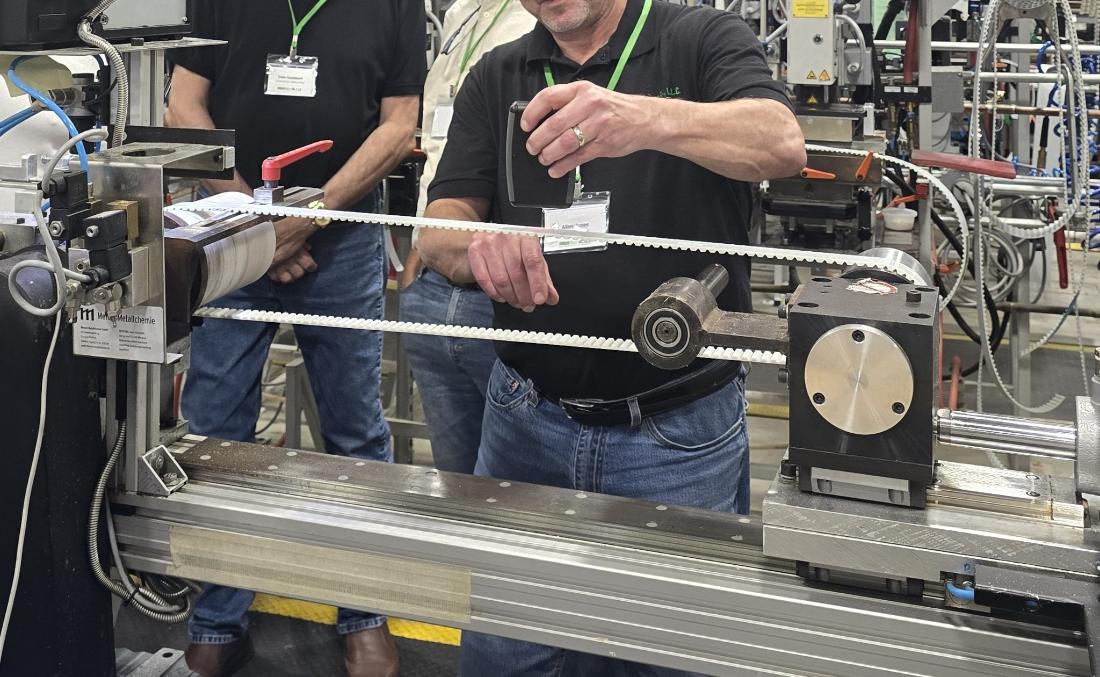
Most timing-belt failures fall into five categories, and most are preventable.
Tooth jumping is the most common — almost always a sign of under-tensioned belts or a sudden shock load. Re-tension per the manufacturer spec and add an idler if the drive sees shock.
Cord breakage comes from over-tension or a small pulley that bends the belt past its minimum. Check the minimum-pulley-diameter spec for your profile and pitch, and never run a belt on a smaller pulley.
Back cracking is usually temperature — running past the rated +80 °C for rubber or +90 °C for PU degrades the cover compound. Move the drive away from heat sources or switch to a higher-temp compound.
Wear on the tooth flank is usually a misalignment or a contaminated drive. Re-align the pulleys and protect the belt from oil splash.
Edge fraying is a sign of a misaligned pulley or a worn flange. Replace the pulley flange and re-align.